10 Hidden Gems in Jerusalem Most Travelers Miss
Jerusalem is one of the most fascinating cities in the world. Every year, millions of visitors come to explore its famous landmarks, including the Church of the Holy Sepulchre, the Western Wall, the Dome of the Rock, the Via Dolorosa, and the Mount of Olives. These sites deserve their reputation and remain essential stops on any visit to the Holy City.
But beyond the well-known attractions lies another Jerusalem—one hidden behind ancient stone walls, beneath busy streets, inside quiet courtyards, and along overlooked alleyways that many travelers pass without ever noticing.
Having been born and raised in Jerusalem's Old City and working as a licensed tour guide for many years, I have had the privilege of helping visitors discover not only the city's famous sites but also its lesser-known treasures. Some of these places offer spectacular views, others preserve centuries-old traditions, and some simply provide a peaceful moment away from the crowds.
In this guide, I would like to share 10 hidden gems in Jerusalem and unique experiences that most travelers miss in holy city. From rooftop viewpoints and underground tunnels to local food traditions and quiet corners of the Old City, these places reveal a side of Jerusalem that many visitors never have the opportunity to experience.
Whether you are visiting Jerusalem for the first time or returning for another pilgrimage, I hope these suggestions help you discover a deeper, more authentic side of this extraordinary city.
Let's begin!
1) Enjoy One of the Best Hidden Views from the Austrian Hospice Rooftop
Hidden just off the Via Dolorosa, directly opposite Station III of the Cross in Jerusalem's Old City, the Austrian Hospice is one of the city's most charming and overlooked attractions.
Built in 1863 as a pilgrims' guesthouse for Austrian Christians, the hospice later hosted Emperor Franz Joseph during his historic visit to Jerusalem in 1869. It is also widely regarded as the first Christian institution established in Jerusalem after the end of the Crusader period, giving the building a unique historical significance beyond its peaceful atmosphere.
The moment you step through its entrance, the noise and intensity of the Old City begin to fade away. The elegant courtyards, quiet hallways, and historic architecture create the feeling of having stepped into a different world.
One of the highlights of the Austrian Hospice is its rooftop terrace, accessible by both stairs and elevator. For an entrance fee of only 5 NIS (less than $2 USD), visitors are rewarded with one of the most beautiful panoramic views in Jerusalem. From the rooftop, you can admire the rooftops of the Muslim Quarter, Christian Quarter, church domes, minarets, and many of Jerusalem's most famous landmarks.
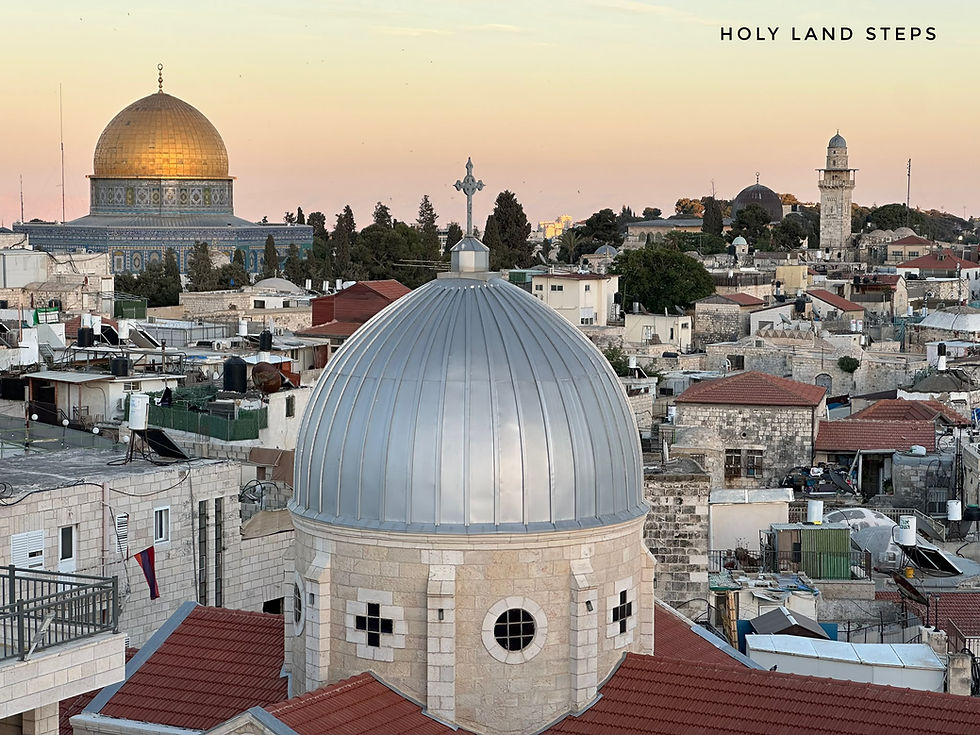
Photographers particularly appreciate the unique perspective offered by the terrace. One of Jerusalem's most iconic photographs—where the silver dome of the Church of Our Lady of the Spasm appears almost to touch the golden Dome of the Rock—can be captured from this very rooftop.
After enjoying the view, head back down to the Austrian Hospice café and garden. Surrounded by trees and historic stone buildings, visitors can enjoy traditional Viennese apple strudel, together with coffee or tea. The experience feels surprisingly Austrian despite being located in the heart of Jerusalem's Old City.

The Austrian Hospice also carries personal memories for me. During the years when the hospice operated as a hospital, my father worked here as a surgeon. Perhaps that is one of the reasons why this peaceful corner of Jerusalem has always remained one of my favorite places in the city.
And one final detail that seasoned travelers will appreciate: the free public restrooms are exceptionally clean—something not always easy to find inside the Old City of Jerusalem.
Insider Tip: Visit the Austrian Hospice rooftop either early in the morning or during the late afternoon when the light is ideal for photography in Jerusalem. Before leaving, treat yourself to a traditional Viennese apple strudel in the garden café and enjoy a quiet break from the crowds. For just a few shekels, the Austrian Hospice offers one of the best hidden gems in Jerusalem.
2) Visit the Western Wall at Night and Explore the Western Wall Tunnels
Millions of visitors come to the Western Wall each year, but relatively few experience it after dark. While the plaza can be crowded during the day, the atmosphere changes dramatically in the evening. As the crowds begin to thin and the temperatures become cooler, the Western Wall transforms into a quieter and more intimate place.
The illuminated limestone stones, the sound of distant prayers, and the peaceful nighttime atmosphere create one of the most memorable experiences in Jerusalem. Late in the evening, the Western Wall often feels less like a tourist attraction and more like a living spiritual space where local residents come to pray, reflect, and connect with centuries of tradition.

For those looking to discover another hidden layer of Jerusalem, the experience does not end at the plaza. Beneath the streets of the Old City of Jerusalem lies one of Jerusalem's most fascinating archaeological attractions: the Western Wall Tunnels.
The Western Wall Tunnels expose sections of the original retaining walls of the Temple Mount that remained hidden for centuries. Walking through these underground passageways feels like stepping back into ancient Jerusalem, revealing parts of the Western Wall that cannot be seen from the prayer plaza above.
One of the highlights of the tour is the famous Great Stone, one of the largest building stones ever discovered in the ancient world. Estimated to weigh several hundred tons, this enormous block continues to amaze archaeologists, engineers, and visitors alike, raising questions about the remarkable construction techniques used more than two thousand years ago.
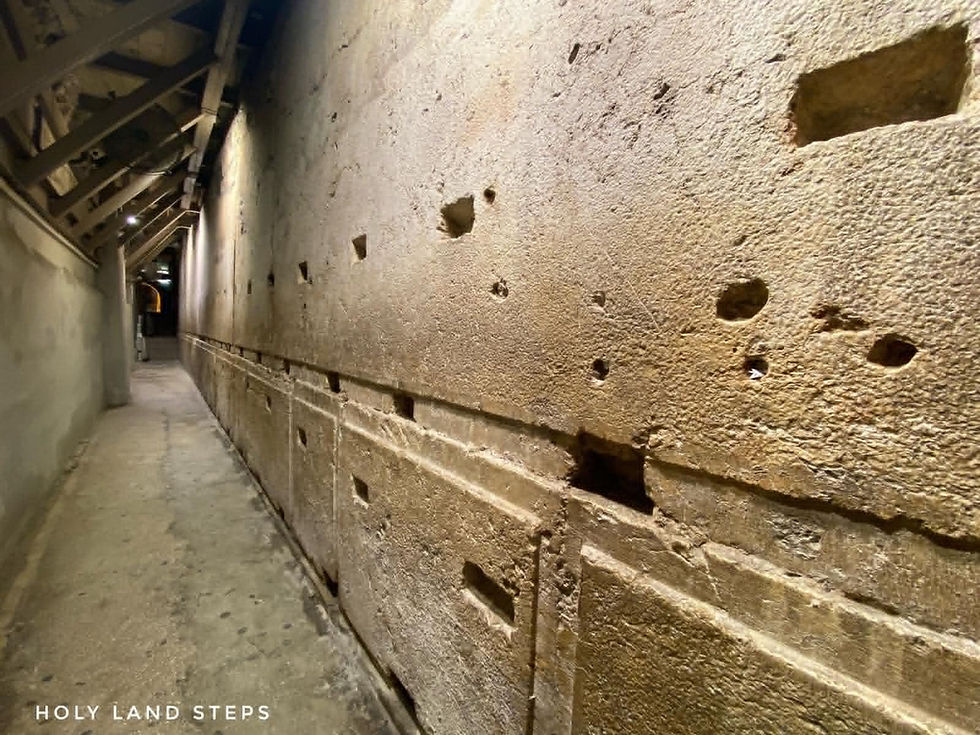
Along the route, visitors encounter hidden chambers, ancient water systems, archaeological remains, and underground spaces that tell the story of Jerusalem through different historical periods. The tour provides a unique opportunity to explore parts of the city that remain invisible to most travelers.
The Great Stone Route tour typically lasts between 60 and 80 minutes and currently costs approximately 38 NIS per adult (around $13 USD). Since the tunnels are located within the Western Wall complex, modest clothing is recommended.
Insider Tip: Visit the Western Wall at night shortly before sunset and remain through the evening hours to experience both the changing atmosphere of the plaza and the illuminated ancient stones after dark. Then continue underground with the Great Stone Route for a completely different perspective on Jerusalem. Reservations are required and should be made in advance through the official Western Wall Tunnels website, especially during holidays and peak tourist seasons.
3) Experience Jerusalem's Most Beautiful Sunset from the Mount of Olives
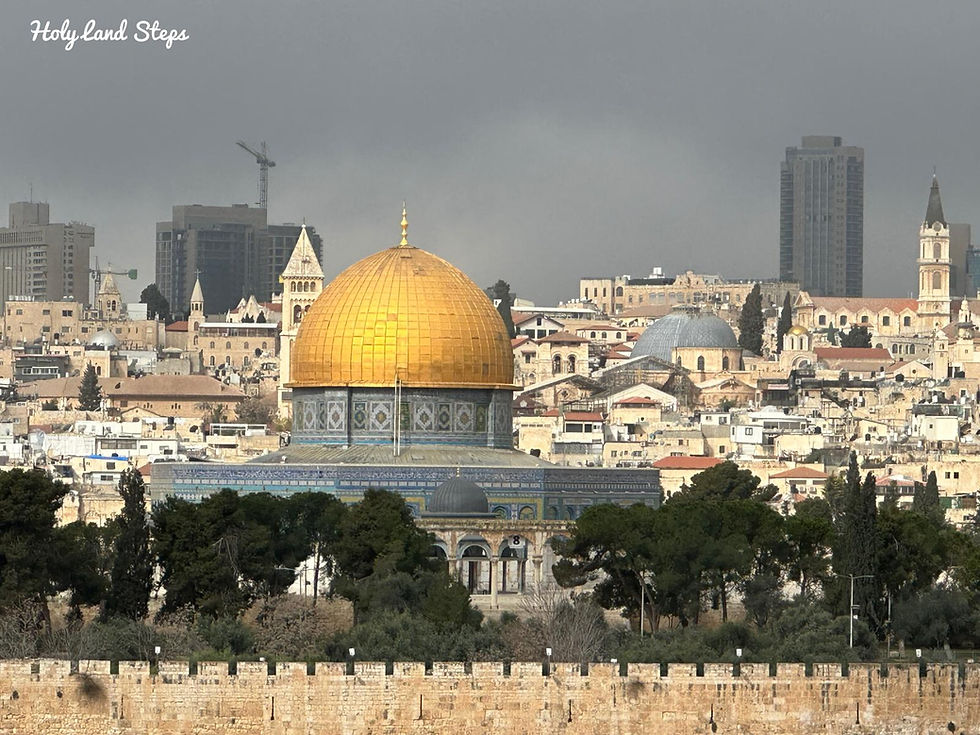
One of the most beautiful ways to end your day in Jerusalem is by watching the sunset from the top of the Mount of Olives. As the sun slowly disappears behind the hills to the west, the entire Old City of Jerusalem begins to glow in golden colors. The ancient walls, church towers, minarets, and the shining Dome of the Rock create one of the most breathtaking panoramic views in the Holy Land.
Beyond its spectacular scenery, the Mount of Olives is one of the most important religious sites in Jerusalem. According to Christian tradition, it was here that Jesus wept over Jerusalem, taught His disciples, prayed nearby in the Garden of Gethsemane, and later ascended into heaven. For centuries, pilgrims have climbed the mountain not only for its magnificent views but also for its profound spiritual significance.

The slopes of the Mount of Olives are also home to one of the world's oldest and most important Jewish cemeteries. With tens of thousands of tombs overlooking Jerusalem, the cemetery reflects the mountain's sacred importance in Jewish tradition and adds another layer to the remarkable landscape spread out below.
There is something deeply special about seeing the day come to an end over Jerusalem. Whether you are religious or not, standing above the city while church bells ring, the Muslim call to prayer echoes through the valleys, and the city slowly transitions from day to night creates a peaceful and emotional atmosphere that many travelers remember for years.
Even during summer evenings, the top of the Mount of Olives can become surprisingly windy and cool after sunset. It is highly recommended to bring a light jacket or a long-sleeved shirt, especially if you plan to stay until darkness falls.
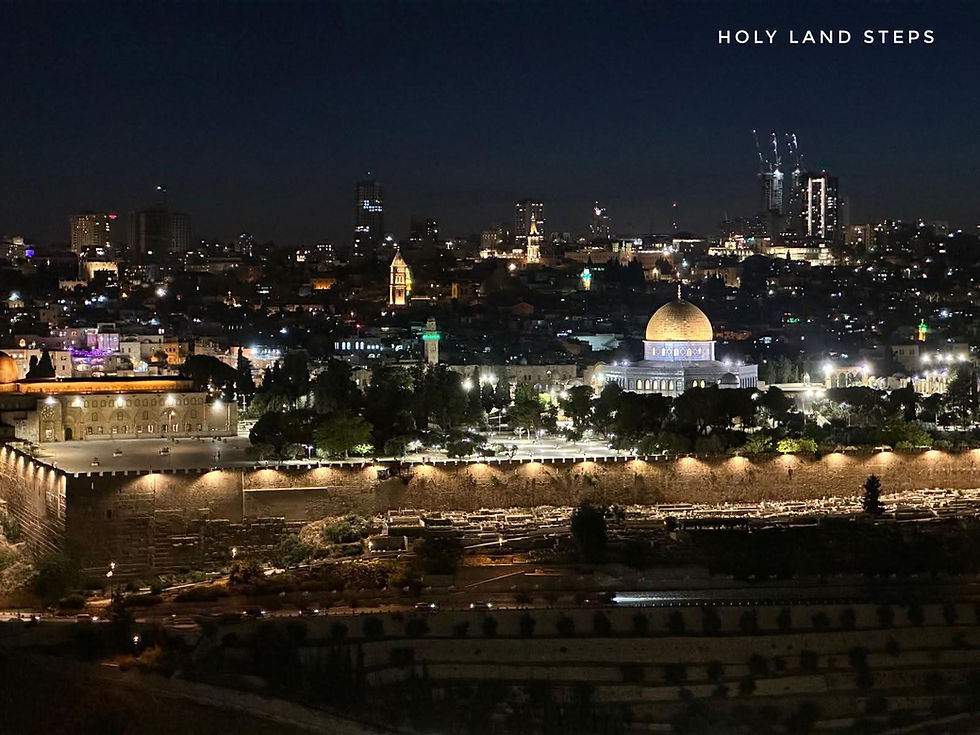
Reaching the viewpoint is relatively easy by public transportation. Bus number 275 departs from Sultan Suleiman Road, just outside the Old City near Damascus Gate, and travels directly to the Mount of Olives. The journey takes approximately 20 minutes, and the final stop leaves visitors only a short walk from the panoramic viewpoint.
If you have time for only one panoramic viewpoint in Jerusalem, the Mount of Olives at sunset is hard to beat. As daylight fades and the city lights begin to appear, Jerusalem reveals a side that photographs can never fully capture.
Insider Tip: Arrive at least 30 to 45 minutes before sunset to watch the changing colors over the Old City of Jerusalem. Stay another 15 to 20 minutes after sunset when the Dome of the Rock, church towers, and city walls begin to illuminate against the evening sky. The view is often even more beautiful after the sun has disappeared below the horizon.
4) Taste Jerusalem's Famous Knafeh at Jaafar Sweets
Few desserts represent Jerusalem and Arab cuisine better than authentic knafeh nabulsieh. Rich, sweet, hot, and freshly baked, knafeh is considered one of the most iconic foods to try while visiting the Holy City.
One of the most famous places to experience it is Jaafar Sweets, located just inside Damascus Gate in Jerusalem's Old City, along the bustling market street of Suq Khan al-Zeit. As you walk down through the gate into the busy market streets of the Old City of Jerusalem, the shop quickly reveals itself through the smell of warm syrup and melted cheese, the giant trays of freshly baked knafeh displayed at the entrance, and the crowds constantly gathering around the counters. The Jaafar family has been preparing traditional Arabic sweets for generations, and the shop has become one of Jerusalem's most famous culinary landmarks.

Knafeh Nabulsieh is traditionally made from melted white cheese layered beneath a baked topping. Depending on the style, the topping can either be soft semolina dough or crispy shredded pastry strands. The dessert is baked in large round trays until golden and bubbling hot, then covered with sweet sugar syrup and sprinkled generously with crushed pistachios.
In Jerusalem, you will usually find two main types of knafeh. The first is Knafeh Na'ameh, a softer and smoother version made with fine semolina dough. The second is Knafeh Khishneh, which has a crunchier texture created from crispy shredded pastry on top. Both are popular across Israel and Palestine, and each has its own loyal fans.
One of the secrets of enjoying knafeh properly is eating it immediately while it is still hot and fresh. The combination of melted cheese, warm syrup, and crispy or soft texture is what makes the experience unforgettable. Many locals will tell you that knafeh loses much of its magic once it cools down.

If you walk into Jaafar Sweets and confidently ask for "Nos Wikiya," you will instantly sound much more local. And if one portion is not enough—which often happens once people taste fresh hot knafeh—you can always order another Nos Wikiya afterward.
Traditionally, knafeh is best enjoyed with a simple glass of water rather than coffee or sugary drinks. The water helps balance the richness and sweetness of the dessert while allowing the flavors of the cheese, pistachios, and syrup to stand out naturally.
Trying fresh knafeh in Jerusalem is not simply about eating dessert—it is experiencing one of the city's most beloved culinary traditions.
Insider Tip: When ordering, ask for "Nos Wikiya" (half a Wikiya), which is approximately 125 grams and usually the perfect portion for one person. If you're unsure whether to choose Knafeh Na'ameh or Knafeh Khishneh, start with the Knafeh Na'ameh—the classic Jerusalem favorite. Expect to pay around 15–20 NIS for a generous serving, making it one of the tastiest and most affordable food experiences in Jerusalem's Old City.
5. Enjoy a Traditional Jerusalem Breakfast at Damascus Gate
One of the simplest—and most authentic—things to do in Jerusalem is to enjoy freshly baked Jerusalem bread and falafel from one of the small local vendors outside Damascus Gate. The bread, known locally as ka'ak al-Quds (Jerusalem sesame bread), is baked throughout the day and sold warm from traditional bakeries. Its distinctive oval shape and generous coating of sesame seeds have made it one of the most recognizable examples of Jerusalem street food.

The falafel served around Damascus Gate is often larger than what many visitors are accustomed to elsewhere. Made primarily from ground chickpeas mixed with herbs and spices, the falafel is fried until crispy on the outside while remaining soft and flavorful on the inside. Together, the warm Jerusalem bread and fresh falafel create one of the most popular local breakfast options in Jerusalem.
To enjoy it like many Jerusalemites do, purchase a warm ka'ak al-Quds and a portion of falafel separately. Cut the bread into four sections, open one of the pieces, and place a portion of falafel inside. Add a sprinkle of za'atar—a traditional Middle Eastern blend of thyme, sesame seeds, sumac, and aromatic herbs. The result is a simple yet delicious Jerusalem breakfast that perfectly captures the flavors of the city.
Take a seat on the historic stone steps of Damascus Gate, watch the flow of merchants, students, families, and worshipers, and enjoy a moment that feels far removed from the typical tourist itinerary. Sometimes the most memorable experiences in Jerusalem are not found inside a church, mosque, or museum, but in the local traditions that bring the city's diverse communities together every day.

Insider Tip: Visit Damascus Gate in the morning when the Jerusalem bread is freshly baked and the area is buzzing with local activity. A Jerusalem bread (ka'ak al-Quds) typically costs around 5 NIS, a portion of falafel about 4 NIS, and a cup of tea around 4 NIS. For approximately 13 NIS (about $4 USD), you can enjoy a delicious local Jerusalem breakfast while immersing yourself in the sights, sounds, and flavors of everyday Jerusalem. Few experiences offer a better introduction to authentic Jerusalem life for such a modest price.
6) Witness the Ancient Nightly Closing of the Church of the Holy Sepulchre
Watching the closing of the Church of the Holy Sepulchre is one of the most unique and lesser-known experiences in Jerusalem's Old City. Located in the heart of the Christian Quarter, the church is considered by many Christians to be the holiest place in the world, believed to contain both the site of the crucifixion of Jesus and the Tomb of Jesus.
Throughout the day, the Church of the Holy Sepulchre is filled with thousands of pilgrims, tour groups, prayers, candles, chants, and long lines moving beneath its ancient domes and through its narrow chapels. But as evening approaches, the atmosphere slowly begins to change. The crowds become smaller, the voices quieter, and the massive ancient doors of the church prepare to close after another long and emotional day.
One of the most fascinating traditions connected to the Church of the Holy Sepulchre is the nightly closing ceremony itself. Since the 7th century, the responsibility of holding the key and closing the church doors has remained in the hands of the same two Muslim families, a historic arrangement created to help preserve peace between the different Christian denominations sharing the church. Even today, a member of one of these families arrives each evening to lock the large wooden doors of the church in a tradition that has continued for centuries.
Watching the final moments before closing is a surprisingly memorable experience. Church fathers and clergy members remain inside overnight while the last visitors slowly leave the building. Seeing the giant doors of the Church of the Holy Sepulchre close after spending the day open to pilgrims from all over the world creates a peaceful and reflective atmosphere very different from the busy daytime hours.

The Church of the Holy Sepulchre usually closes at 8:45 PM during summer and at 6:45 PM during winter. Even after the doors are closed, visitors are often still allowed to sit quietly for another 10 to 15 minutes in the main courtyard outside before security politely asks everyone to leave.
For travelers looking to experience a calmer and more intimate side of Jerusalem, witnessing the closing of the Church of the Holy Sepulchre is a beautiful moment that many tourists completely miss.

Insider Tip: Arrive 20–30 minutes before closing and find a quiet place in the main courtyard. After the doors close, remain in the courtyard for a few minutes and enjoy the rare silence that settles over one of Christianity's holiest sites.
7) Discover the Hidden Alleys of Jerusalem's Armenian Quarter
Walking through the quiet streets of the Armenian Quarter offers a completely different atmosphere from the busy markets and crowded pilgrimage routes of the Old City of Jerusalem. Hidden behind ancient stone walls in the southwestern corner of Jerusalem's Old City, the Armenian Quarter feels calm, peaceful, and almost untouched by time, especially during the evening hours.
Unlike the louder and more crowded areas around the bazaars, the narrow alleys of the Armenian Quarter are known for their silence, warm yellow lighting, old stone archways, and beautifully decorated ceramic signs placed beside the doors of family homes. As you walk through the neighborhood, you will notice many houses marked with elegant Armenian family names written on hand-painted ceramic tiles, reflecting the deep roots of the Armenian community in Jerusalem.
One of the nicest walking routes through the quarter begins from Jaffa Gate. From there, continue along Armenian Patriarchate Road before turning left into Saint James Street, one of the most atmospheric streets in the Old City of Jerusalem. The walk can then continue toward Ararat Street and finally into the quiet alley of Or HaHayim Street, known in Arabic as Noor il-Hayat ("The Light of Life"). This route passes through some of the calmest and most beautiful corners of the Armenian Quarter, especially during the evening when the crowds disappear and the stone streets become peaceful and almost meditative.

The Armenians have been present in Jerusalem since the 4th century and are considered one of the oldest Christian communities in the Holy Land. Over centuries, they developed a rich cultural and religious presence inside the city, becoming especially famous for their Armenian ceramics, illuminated manuscripts, monasteries, and ancient liturgical traditions.
At the heart of the quarter stands the magnificent Armenian Patriarchate of Jerusalem, one of the most impressive yet often overlooked religious complexes in Jerusalem. Behind its large stone walls and wooden gates lies a peaceful world of courtyards, chapels, monasteries, and ancient buildings belonging to the Armenian Orthodox Church.
Inside the patriarchate stands the breathtaking Cathedral of Saint James, considered by many visitors one of the most beautiful churches in Jerusalem. The cathedral is illuminated by countless hanging lamps and filled with richly decorated icons, ancient woodwork, incense, and deep silence. The church is dedicated to both Saint James the Great and Saint James the Brother of Jesus, the first bishop of Jerusalem. According to Armenian tradition, the head of Saint James the Great is preserved within the cathedral, making it one of the holiest sites in the Armenian Christian world.
One of the most special experiences inside the quarter is attending or listening to the Armenian liturgy. The ancient chants echoing beneath the domes, the candlelight, and the ceremonial processions create an atmosphere that feels almost unchanged for centuries.
Visitors should also not miss the Armenian Museum, which presents the long history of the Armenian people in Jerusalem and the Holy Land. Nearby, one of the hidden treasures of the quarter is the famous Armenian Bird Mosaic, with its stunning bird designs and ancient Armenian inscription, considered one of the most beautiful archaeological mosaics in Jerusalem.

For travelers looking to escape the noise of the markets and discover a quieter and more authentic side of Jerusalem, spending time walking through the Armenian Quarter is one of the city's most rewarding experiences.
Insider Tip: Time your visit to coincide with an Armenian liturgy at the Cathedral of Saint James. The ancient chants, incense, hanging lamps, and candlelit interior offer one of the most memorable spiritual experiences in Jerusalem, yet many visitors to the Old City never discover it.
8) Step Beneath the Via Dolorosa at the Sisters of Zion Convent
Thousands of pilgrims walk the Via Dolorosa in Jerusalem every year, retracing the traditional path of Jesus to Calvary. Yet few realize that one of the most fascinating archaeological sites in Jerusalem lies hidden beneath their feet.
Located along the Via Dolorosa, the Sisters of Zion Convent offers visitors a unique opportunity to explore ancient Jerusalem and gain a deeper understanding of how the city looked during the Roman period. For travelers who walk the Via Dolorosa and wonder what Jerusalem may have looked like nearly 2,000 years ago, this little-known site provides some of the answers.

Beneath the Sisters of Zion Convent, visitors can descend into a series of underground archaeological remains, including sections of ancient stone pavement, water reservoirs, and structures dating back to Roman Jerusalem. These remains have long been associated with the area traditionally identified as the Praetorium, where Jesus was brought before Pontius Pilate, making the site particularly meaningful for Christian pilgrims visiting Jerusalem.

What makes this hidden gem in Jerusalem especially appealing is its affordability. For an entrance fee of only a few dollars (approximately $3 USD), visitors can step away from the crowded streets of the Old City of Jerusalem and explore a quieter side of Jerusalem's history that many tourists completely overlook.
Unlike some of Jerusalem's more famous attractions, the Sisters of Zion Convent rarely appears on standard itineraries. As a result, visitors often have the underground chambers almost entirely to themselves, creating a peaceful and reflective experience in the heart of the Old City.
Whether you are interested in biblical history, biblical archaeology, or simply discovering places that most travelers miss in Jerusalem, the Sisters of Zion Convent is well worth a visit.
Insider Tip: If you are walking the Via Dolorosa, plan an extra 30–45 minutes for the Sisters of Zion Convent. For less than $3 USD, you can gain a fascinating glimpse into the ancient layers of Jerusalem hidden beneath the modern city.
9) Walk Along Jerusalem's Ancient Walls on the Ramparts Walk
Millions of visitors explore the streets of the Old City of Jerusalem every year, but surprisingly few realize that they can actually walk on top of the city's ancient walls. The Jerusalem Walls Promenade, also known as the Ramparts Walk, offers a unique perspective of the Old City of Jerusalem that most travelers never experience.
The Walls of Jerusalem surrounding the city today were built between 1537 and 1541 by the Ottoman Sultan Suleiman the Magnificent. Stretching for approximately four kilometers around the Old City, they have become one of Jerusalem's most recognizable landmarks and a UNESCO World Heritage Site.
The Jerusalem Walls Promenade allows visitors to walk along sections of these centuries-old fortifications while enjoying panoramic views of Jerusalem's rooftops, church bell towers, minarets, marketplaces, and surrounding neighborhoods. It is one of the best ways to appreciate the layout of the Old City of Jerusalem and understand how Jerusalem developed over the centuries.
The Ramparts Walk consists of two separate routes. The Northern Ramparts Walk runs from Jaffa Gate toward Damascus Gate and Lion's Gate, offering views into the Christian Quarter and Muslim Quarter. The Southern Ramparts Walk stretches from Jaffa Gate toward Zion Gate and the Dung Gate, providing excellent views of the Armenian Quarter, Jewish Quarter, and Mount Zion.

One of the best features of the Walls Promenade is that a single ticket grants access to both routes. Visitors can complete one section and return within 48 hours to walk the other route using the same ticket, making it an excellent value for those who want to explore Jerusalem at a slower pace.
Most visitors begin their walk at Jaffa Gate, where tickets can be purchased at the ticket office near the entrance to the Ramparts Walk. While each route can be walked independently, many travelers choose to start with the Southern Ramparts Walk and return another day to complete the Northern Ramparts Walk.
Unlike the crowded streets below, the Jerusalem Walls Promenade offers a quieter and more relaxed experience. As you walk along the ancient stones, it is easy to imagine the watchmen, soldiers, merchants, and pilgrims who have entered Jerusalem through its gates for centuries.

Insider Tip: Try to visit either early in the morning or during the final hours before closing. The softer light creates excellent photography opportunities, and the walls are often far less crowded than the streets below. If you have time for only one section, many locals consider the Northern Ramparts Walk to offer the more dramatic views, while the Southern Ramparts Walk provides a better understanding of the city's different quarters.
10. Visit Teddy Park, Mishkenot Sha'ananim, and the Montefiore Windmill
Many visitors leave the Old City of Jerusalem through Jaffa Gate and head back to their hotels, missing one of the most enjoyable walks in modern Jerusalem. Just outside the Old City walls, Teddy Park, Mishkenot Sha'ananim, and the Montefiore Windmill offer a combination of local culture, beautiful views, and relaxing green spaces that many tourists never discover.
Located between Jaffa Gate and Mamilla Avenue, Teddy Park is a popular gathering place for Jerusalem residents and visitors alike. During the warmer months, the park's famous dancing fountain comes alive with water, music, and light displays, creating a lively atmosphere that attracts families and children from across the city. The park also offers excellent views of the Old City of Jerusalem walls, making it a perfect place to relax after a day of sightseeing.

From Teddy Park, continue your walk toward Mishkenot Sha'ananim, the first Jewish neighborhood built outside the Old City walls in the nineteenth century. Established in 1860 with the support of Sir Moses Montefiore, the neighborhood marked the beginning of Jerusalem's expansion beyond the ancient walls. Today, its quiet streets, historic stone houses, gardens, and viewpoints provide a peaceful escape from the bustling markets and crowded alleys of the Old City of Jerusalem.
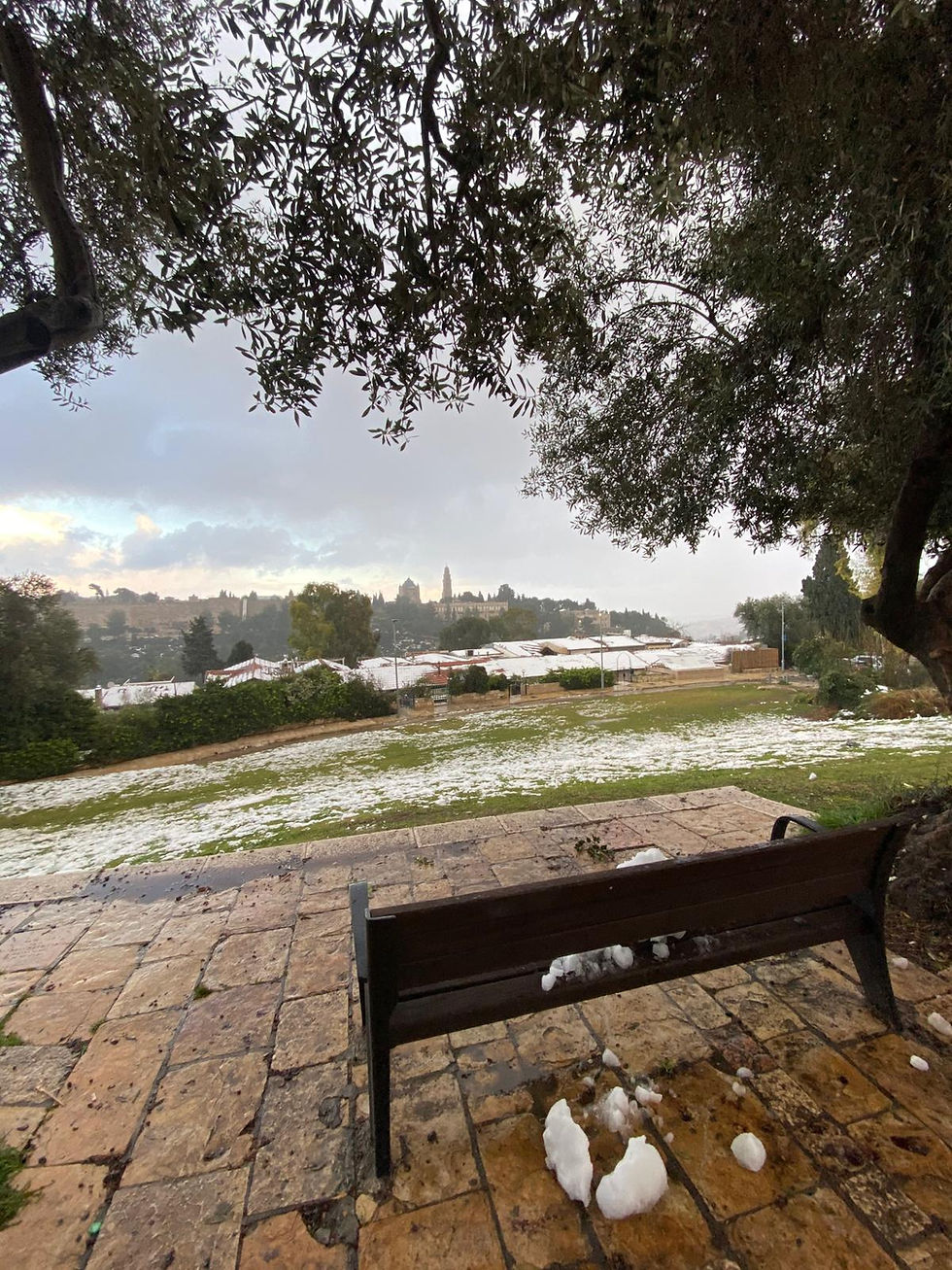
A short walk further brings you to the iconic Montefiore Windmill, one of Jerusalem's most recognizable landmarks. Originally built to help provide affordable flour to the city's residents, the Montefiore Windmill has become a symbol of modern Jerusalem. The surrounding park offers some of the city's most beautiful free viewpoints in Jerusalem, overlooking the Old City walls, Mount Zion, and the neighborhoods beyond.
Unlike many of Jerusalem's famous attractions, this area is primarily enjoyed by locals. Whether you are looking for a relaxing evening walk, a family-friendly activity in Jerusalem, or a different perspective on the city, Teddy Park, Mishkenot Sha'ananim, and the Montefiore Windmill provide an experience that many travelers overlook.
Insider Tip: Visit in the late afternoon and stay until sunset. Start at Teddy Park to enjoy the dancing fountain, continue through the historic streets of Mishkenot Sha'ananim, and finish near the Montefiore Windmill as the Old City of Jerusalem begins to glow in the evening light. Best of all, this entire experience can be enjoyed free of charge.
I hope this guide inspires you to slow down, explore beyond the highlights, and create memories that will stay with you long after your journey ends.
If you're planning a visit to the Holy Land and would like to experience these places with a licensed local guide, I'd be delighted to help. At Holy Land Steps, I offer private and small-group tours designed to combine the city's famous landmarks with its hidden treasures, local stories, and authentic experiences.
I look forward to welcoming you to Jerusalem and helping you discover the Holy City—one unforgettable step at a time.
Tareq Hawari
Licensed Tour Guide | Founder of Holy Land Steps
Also read:

Comments